Quick answer: A gutter price per linear foot is useful only when you know what it includes. Before multiplying it by your gutter length, confirm whether the rate covers downspouts, corners, removal, disposal and installation—and whether fascia repairs or drainage extensions cost extra. Published contractor scopes show that some of these items are bundled while others remain exclusions. Compare the complete written project, not just the advertised rate. (foxgutters.com)
1. Establish what the linear-foot price actually buys
Start with one question: “Does this price cover the complete replacement, or only the horizontal gutter runs?”
For example, one Seattle-area contractor publishes an installation scope that includes downspouts, elbows, outlets, old-gutter removal and cleanup, but excludes fascia repairs and structural rot. That distinction matters more than whether those services appear as separate charges or are bundled into one rate. (foxgutters.com)
Ask each bidder to complete this comparison:
| Quote component | What to have confirmed |
|---|---|
| Horizontal gutters | Measured length, material, profile, size and thickness |
| Corners and ends | Included quantities and any separate fitting charges |
| Downspouts | Number, dimensions, total length and fittings |
| Replacement work | Removal, disposal and cleanup |
| Access | Any staging or equipment allowance |
| Supporting surfaces | Inspection and treatment of damaged fascia |
| Discharge | Where each downspout ends and what work is included |
| Final price | Taxes, options, allowances and exclusions |
Use this as a request for clarification, not a demand that every contractor use the same invoice format.
A bundled estimate can be perfectly understandable if its specifications are complete. Conversely, a long itemized estimate is not useful if key quantities or exclusions remain blank.
2. Use regional prices as a reference—not a complete budget
For a dated regional reference, Copper Fox Gutters published these Seattle-area installation rates on April 10, 2026. All amounts below are U.S. dollars (USD). These are one contractor’s advertised rates, not an independently established market average. (foxgutters.com)
| Published option | Advertised installation rate |
|---|---|
| 5-inch seamless aluminum | $10–$15 per linear foot |
| 6-inch seamless aluminum | $12–$15 per linear foot |
| Copper, half-round or K-style | $24–$35 per linear foot |
The publisher identifies these prices as its own rates and lists sales tax separately. Do not assume the same scope, tax treatment or pricing applies to another contractor or location. (foxgutters.com)
Use the figures to prepare questions rather than decide whether a quote is fair. If your estimate differs substantially, ask the bidder to explain the specifications, access requirements and included work.
Avoid multiplying a regional rate by your house’s floor area. For your comparison, request the contractor’s measured gutter-run length and a separate downspout schedule. Keep those quantities visible even when the final proposal uses a bundled price.
3. Specify material, profile, size and thickness separately
“Aluminum gutters” is not a complete product description.
Englert’s manufacturer catalog distinguishes nominal aluminum thicknesses of 0.027 inch and 0.032 inch and identifies different downspout dimensions. Drexel Metals separately catalogs K-style, half-round and box profiles, with matching components. These documents demonstrate why two proposals bearing the same material name may specify different systems. (englertinc.com)
Ask for these details in writing:
- Material: Identify the actual metal or other proposed material.
- Profile: Name the gutter shape rather than relying on a photograph.
- Nominal size: Record the proposed gutter dimension.
- Metal thickness: Request the numerical specification where applicable.
- Finish and color: Identify the manufacturer’s proposed finish.
- Construction: State whether the proposal uses continuous runs or sectional pieces.
Treat these as comparison fields, not a ranking in which the largest or thickest option automatically wins.
PNNL’s Building America Solution Center says gutters and downspouts need to accommodate anticipated water loads. Have a qualified professional explain the proposed sizing rather than selecting it from price alone. (basc.pnnl.gov)
If one bidder proposes a different size, ask: “What property conditions explain this choice, and what changes elsewhere in the system?”
4. Count corners, outlets and downspouts—not just gutter length
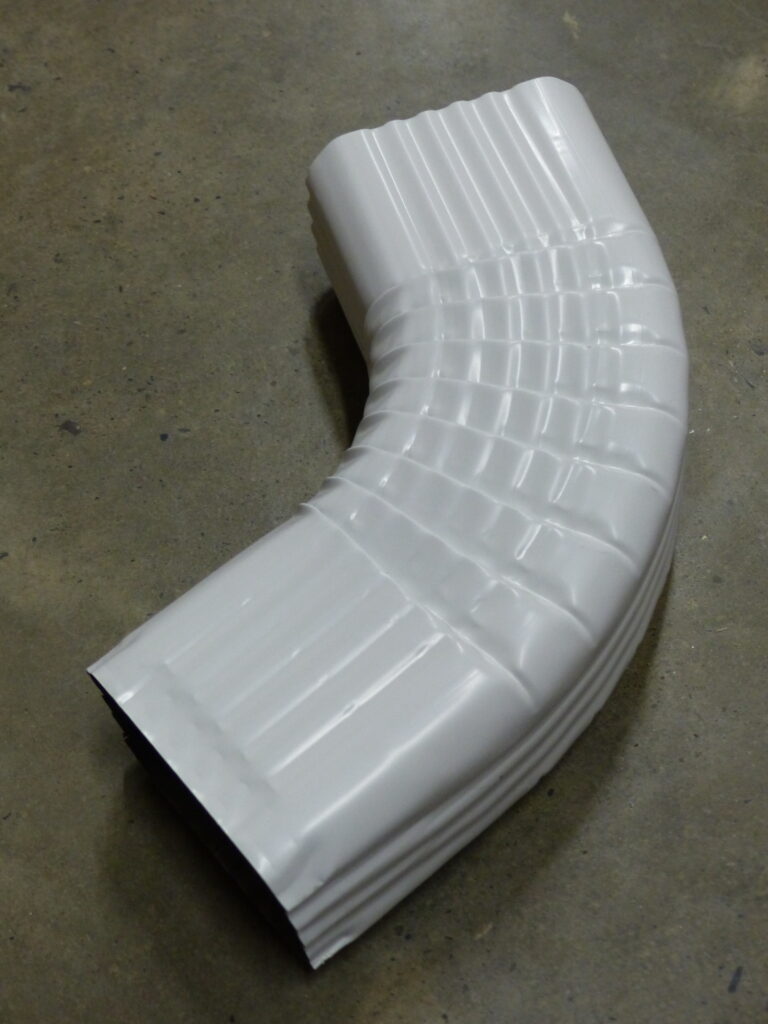
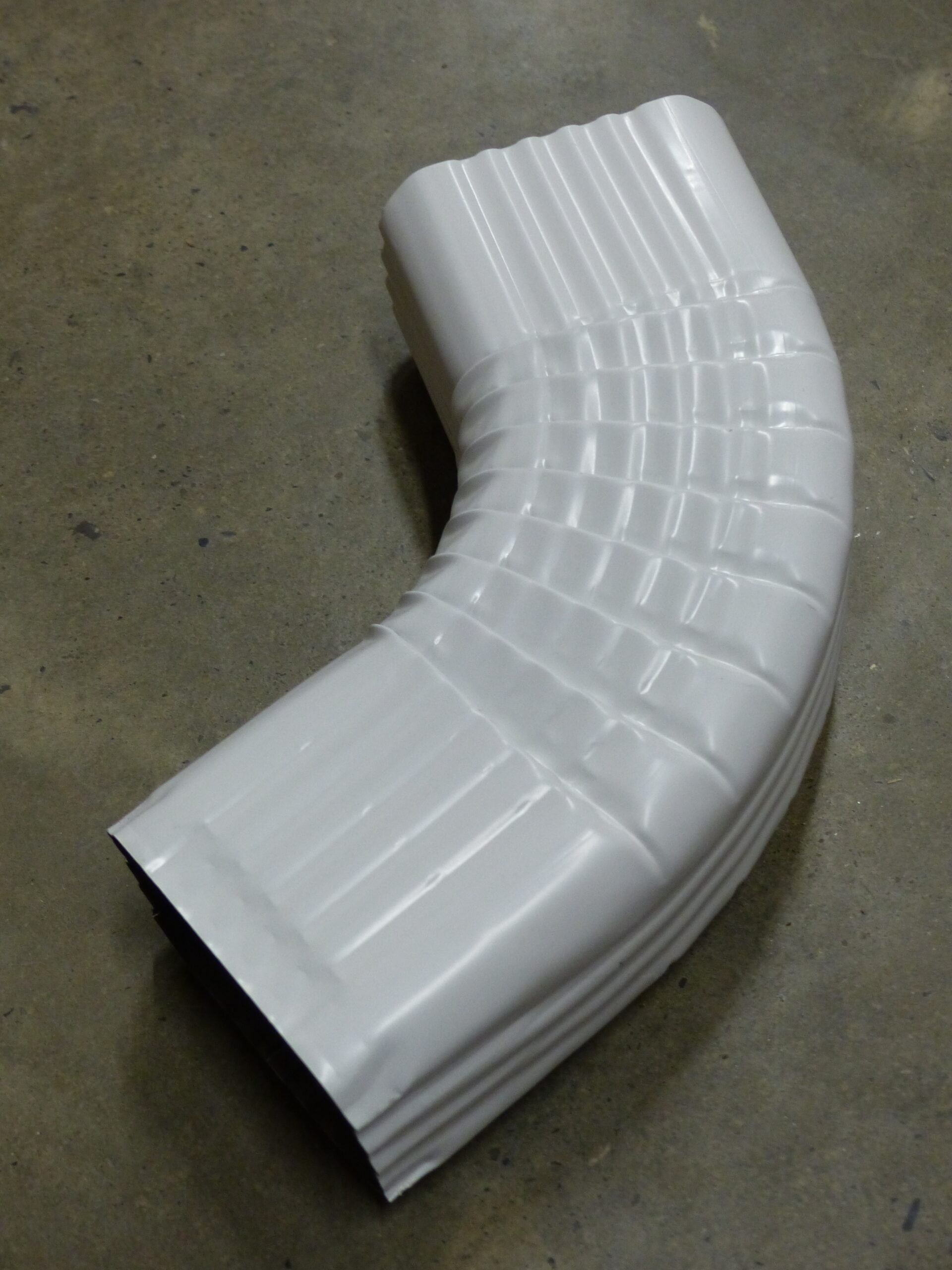
A gutter system includes more than its long horizontal sections. Drexel’s system diagram identifies inside and outside corners, end caps, hangers, outlets, elbows and downspouts. Its catalog also distinguishes front, side and offset elbows. (drexmet.com)
That gives you a practical way to compare proposals: request a simple sketch showing each gutter run and downspout location.
For downspouts, ask the contractor to record:
- Number of downspouts.
- Dimensions and material.
- Total installed length.
- Elbows and offsets included.
- New components versus components being reused.
- Discharge arrangement at each outlet.
Englert’s catalog lists both 2-by-3-inch and 3-by-4-inch downspout components, reinforcing the need to specify dimensions rather than accepting “downspouts included” as the entire description. (englertinc.com)
Do not prescribe the number of outlets yourself simply to reduce the quote. PNNL notes that downspout quantity depends partly on downspout cross-section and the water load being managed. (basc.pnnl.gov)
Instead, ask bidders to explain differences. A proposal with fewer downspouts needs a design explanation; a proposal with more needs a clear scope and price explanation.

5. Separate removal, access and fascia repairs
Three questions help reveal replacement costs that a headline rate may obscure.
What happens to the old system? Ask whether removal, hauling and disposal are included. Have the proposal identify any existing downspouts or other components that will remain.
What access is assumed? Ask whether the quoted price includes the equipment or staging needed for the actual work areas. ENF’s Seattle-area cost guide identifies two- and three-story staging as a cost driver. (enf-company.com)
What happens if damaged fascia is exposed? Request a written process for documenting concealed damage, pricing repairs and obtaining your approval. One published contractor scope explicitly includes fascia inspection but excludes the resulting repairs from its base installation price. (foxgutters.com)
For your budget, distinguish:
- Fixed-price included work: What the contractor has committed to complete.
- Allowances: Amounts reserved for a defined but uncertain scope.
- Exclusions: Work you may need to purchase separately.
Ask what happens to an unused allowance and how work beyond it is authorized. Do not treat an allowance as proof that all concealed damage is covered.
You do not need to climb up to investigate. Ask the contractor to provide photographs and explain any proposed additional work before you approve it.
6. Define where the water goes after the downspout
A replacement proposal should identify the discharge point, not stop at “new downspouts.”
PNNL explains that roof runoff needs to be directed away from the foundation. Its guidance describes discharge to daylight away from the building, underground catchment and properly designed rainwater-harvesting overflow arrangements. These are planning principles, not a property-specific drainage design. (basc.pnnl.gov)
Ask the bidder:
- Where will each downspout terminate?
- Are surface extensions or splash blocks included?
- Does the proposal reconnect to an existing buried pipe?
- Is checking that existing pipe included?
- Who handles any new underground drainage work?
- What remains outside the gutter contractor’s scope?
ENF’s regional guide treats underground downspout routing as a separate cost item, illustrating why a gutter-run price should not be assumed to cover drainage excavation or pipework. (enf-company.com)
Have a qualified professional determine suitable discharge arrangements and verify applicable local requirements. Do not assume an existing connection is suitable merely because the previous downspout used it.
7. Worked example: equal gutter length, different projects
Consider two hypothetical homes, each requiring 160 linear feet of horizontal gutter. The quantities below are invented solely to illustrate comparison; they are not recommended designs.
| Scope item | Home A | Home B |
|---|---|---|
| Horizontal gutter | 160 feet | 160 feet |
| Building configuration | One story | Two stories |
| Downspouts | Four, totaling 40 feet | Six, totaling 120 feet |
| Routing | Relatively direct | Additional offsets |
| Access | Straightforward work areas | Staging needed in some areas |
| Discharge | Defined surface arrangements | Underground-drainage scope unresolved |
For a simple arithmetic illustration, suppose both proposals use a hypothetical $12-per-foot rate for horizontal gutter work only:
160 feet × $12 = $1,920 per home.
That is an equal subtotal—not an equal completed-project price.
Home B has 80 additional feet of downspout and two additional downspouts, plus different access and discharge assumptions. Obtain actual prices for those differences. Do not insert a guessed surcharge.
This example reflects two documented scope distinctions: manufacturer catalogs identify downspout fittings as separate system components, and regional contractor guidance identifies height and underground drainage as additional cost considerations. (drexmet.com)
If a contractor’s per-foot rate already includes these items, do not add them again. Ask the contractor to confirm the included quantities instead.
8. Compare complete bids and agree on practical checks
Before choosing, send each bidder the same clarification list:
- Confirm gutter length and product specifications.
- Show corners and downspout locations on a sketch.
- Identify included downspout lengths and fittings.
- Confirm removal, disposal and access arrangements.
- Explain concealed-damage allowances and approvals.
- Define discharge work and drainage exclusions.
- State the total payable price and optional extras.
- Describe the completion check and written warranty terms.
Ask whether the contractor will demonstrate drainage through the completed system and document the result. A published Seattle installation scope includes a water test, showing that this is a reasonable service to ask about—not something to assume every bid includes. (foxgutters.com)
Avoid three comparison mistakes: choosing by the lowest headline rate, paying twice for already bundled work, and treating an unresolved exclusion as a zero-dollar item.
The useful comparison is the price for the same defined outcome: specified gutters and downspouts, agreed removal and access work, a process for concealed damage, and a clear discharge scope.