Quick answer
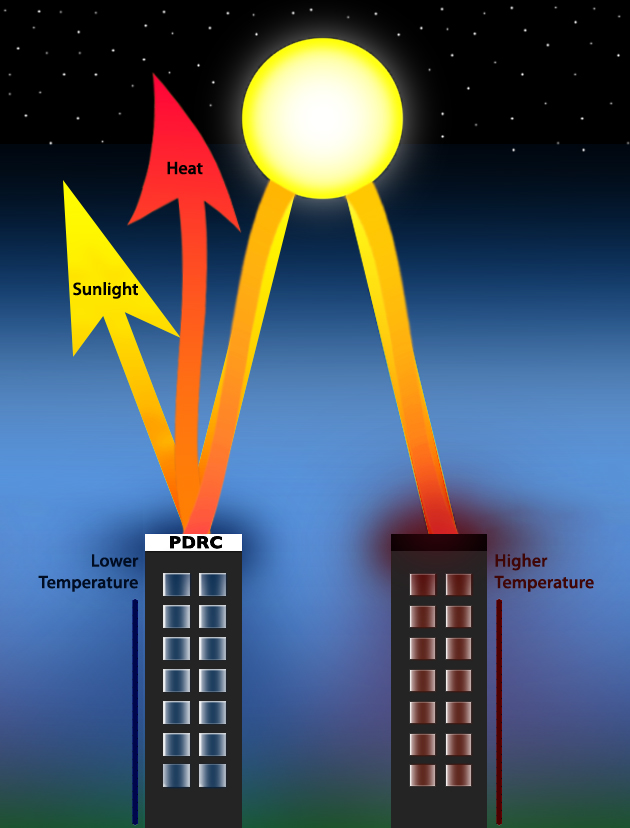
A cool roof can reduce air-conditioning costs, but a reflective surface alone does not establish your annual savings. Before accepting a dollar estimate, ask for the exact product’s aged ratings, a calculation matched to your home and climate, current utility rates, and the winter heating impact. Hot, sunny locations generally offer stronger cooling opportunities, especially in homes with less roof insulation. (energystar.gov)
The useful question is not simply whether a roof stays cooler. It is whether the proposed roof reduces your annual heating and cooling costs enough to justify any additional expense.
Use the following checks to separate documented product performance from a sales estimate that still needs evidence.
1. Understand what the roof ratings actually measure
Three terms appear frequently in cool-roof literature:
| Rating | What it tells you | What it does not tell you |
|---|---|---|
| Solar reflectance, or SR | The fraction of incoming solar energy the surface reflects | The percentage reduction in your electricity bill |
| Thermal emittance, or TE | How effectively the surface releases absorbed heat through thermal radiation | The insulation value of the roof assembly |
| Solar Reflectance Index, or SRI | A calculated comparison combining reflectance and emittance | A household energy-savings percentage |
Reflectance and emittance are measured on a scale from 0 to 1. SRI uses a different scale based on reference surfaces; values below zero or above 100 are possible. An SRI of 80 therefore does not mean 80% reflectance or 80% energy savings. (coolroofs.org)
Do not select by color alone. Lighter surfaces tend to perform well, but specially formulated colored roofing can also reflect solar energy effectively. Ask for ratings for the specific material and finish, rather than assuming every white, gray or metal roof performs alike. (energystar.gov)
Practical check: When someone presents a percentage, ask: “Is that reflected sunlight, reduced cooling energy, reduced cooling cost, or reduced total household bills?” Request that the answer be written beside the claim.
2. Verify the exact product and its aged ratings
Start with the Cool Roof Rating Council’s Rated Roof Products Directory. Match the manufacturer, model, color and complete CRRC product ID to the proposed material. The directory separates initial ratings from three-year-aged values. A letter at the end of an ID can identify a retested or reformulated product with replacement ratings. (coolroofs.org)
For a long-term savings estimate, ask which aged values were used. DOE advises basing energy savings on long-term reflectance and emittance rather than treating new-product performance as permanent. (energy.gov)
Distinguish these descriptions:
- Three-year-aged: Based on specimens exposed at approved test farms.
- Rapid Rating: An interim laboratory-aged value, later replaced by three-year-weathered data.
- Pending: The three-year-aged value is not yet available in the listing.
A pending field does not establish poor performance. It means the calculation needs a clearly disclosed assumption—not an invented aged rating. (coolroofs.org)
Worked example: reading published product data
GAF’s ratings sheet, headed September 24, 2026, lists these Shafter, California plant entries for Timberline HDZ Reflector Series/HDZ RS:
| Color and CRRC ID | Initial SR | Three-year SR | Three-year TE |
|---|---|---|---|
| Copper Canyon, 0676-0097 | 0.17 | 0.18 | 0.90 |
| Golden Amber, 0676-0098 | 0.20 | 0.22 | 0.89 |
The aged reflectance difference is 0.22 − 0.18 = 0.04, or four percentage points of incoming solar energy. That is not four percentage points of bill savings. The entries also have different emittance values, so reflectance alone does not complete the comparison. These are document-reading examples, not product recommendations or confirmation of local availability. (gaf.com)
3. Compare summer benefits with winter consequences
A reflective roof limits solar heat absorption in winter as well as summer. That can increase heating needs. DOE notes that winter penalties can be smaller than summer savings in mixed climates, but the balance remains location- and building-dependent. (energy.gov)
Consider two hypothetical homeowners. These are qualitative comparisons, not modeled results:
| Hypothetical home | What to investigate first | What not to assume |
|---|---|---|
| An air-conditioned home in a hot, sunny climate | Whether lower solar heat gain meaningfully reduces cooling demand | That a regional marketing percentage applies to this house |
| A home with a long heating season and limited air-conditioning use | Whether summer savings exceed additional heating costs | That the winter effect is automatically negligible |
These contrasting questions follow the documented climate tradeoff: cooling opportunities are generally stronger in hot, sunny locations, while heating impacts become more important in colder climates. PNNL guidance also identifies circumstances in very cold climates where an overall energy penalty can occur. (energystar.gov)
Ask for annual cooling savings, annual heating change and the net annual result, not just the best summer month.
Keep comfort separate from cash savings. A cooler building during hot weather can be valuable, but that benefit should not be presented as a measured utility-bill reduction without supporting calculations. (energystar.gov)
4. Make the calculation describe your actual home
The roof surface is only one part of the heat-flow path. Insulation, attic construction, ventilation, ducts and heating-and-cooling equipment all belong in a serious evaluation. ORNL’s Roof Savings Calculator documentation explicitly includes aged roof properties, insulation, above-sheathing ventilation, duct location and HVAC details among its adjustable inputs. (ornl.gov)
Before accepting an estimate, request an input sheet covering:
- Location and weather: Which location represents the home?
- Building geometry: What area and number of stories were entered?
- Roof assembly: Does the model represent the actual construction?
- Insulation: Was its level documented or assumed?
- Attic and ducts: Were ventilation and duct location represented?
- HVAC: What equipment type and efficiency were entered?
Mark unknowns as unknowns. If insulation or equipment performance has not been established, ask the estimator to show how plausible alternative inputs change the answer.
Also separate improvements. If a proposal adds insulation, changes attic ventilation and installs reflective roofing, request a comparison that isolates the roof-surface change. Otherwise, you cannot tell which part of the package is responsible for the projected benefit. That is a comparison method—not a claim that any one improvement will deliver a particular result.

5. Check the utility rates, baseline and calculator limits
Energy savings and dollar savings are different outputs. ORNL’s cool-roof calculator asks for electricity prices, heating-fuel prices and equipment efficiencies because those inputs affect the financial result. It also reports cooling savings separately from heating savings or penalties. (coolroof.ornl.gov)
Ask the estimator to identify the rate source and date. Do not accept old example prices merely because they appear in a calculator. For a time-of-use tariff, ask how the calculation treats the hours when electricity is saved.
The comparison roof matters, too. ORNL’s basic calculator compares a proposed surface against a specified black-roof baseline and explains that comparing two non-black roofs requires comparing their separate results. A quote should therefore identify the alternative roof—not just label it “standard.” (coolroof.ornl.gov)
For replacement shopping, request a comparison between the actual roof options you are considering, with other assumptions held constant.
Finally, verify that the tool fits the roof. ORNL’s basic Cool Roof Calculator explicitly estimates results for flat roofs. Do not accept its output as a property-specific estimate for a steep-slope house without an explanation of the method’s suitability. (coolroof.ornl.gov)
6. Compare any price premium—not an unrelated project total
If replacement is already necessary, ask for otherwise comparable bids that identify any additional cost attributable to the reflective option.
DOE identifies both the incremental purchase cost and any incremental cost of keeping the roof clean and reflective as relevant to cost-effectiveness. It also cautions that replacing a mechanically sound roof solely to increase reflectance is rarely economical. (energy.gov)
Use this comparison structure:
Net annual operating benefit = cooling-cost reduction − additional heating cost − additional recurring costs
Then, if that benefit is positive:
Simple payback = additional installed cost ÷ net annual operating benefit
Treat this as screening arithmetic, not a complete ownership forecast. Ask separately about financing, maintenance assumptions and uncertainty. If the estimated annual benefit is zero or negative, there is no positive energy-only simple payback under those assumptions.
Do not let the calculation conceal differences in roofing scope. Request a side-by-side explanation of materials and work so you know whether the premium buys reflectance, a different roof system, or additional work unrelated to energy performance.
7. Use this checklist before accepting a savings claim
Ask the contractor or estimator:
- What exact product, color and CRRC ID will be supplied?
- Which initial and aged ratings were entered?
- Are any aged values pending, laboratory-aged or otherwise assumed?
- What roof is the proposed product being compared against?
- Which climate, insulation, attic and HVAC inputs were used?
- What utility rates and billing periods support the dollar estimate?
- What are the separate cooling savings, heating impact and net annual result?
- Which inputs are uncertain, and how much do they change the result?
- What additional installed and recurring costs belong to this option?
These questions connect the published rating information with the building and cost inputs used in DOE and ORNL guidance. (coolroofs.org)
Common mistakes to reject are treating SRI as a savings percentage, using initial ratings indefinitely, omitting winter heating, or presenting a flat-roof calculation without acknowledging its scope. (coolroofs.org)
The decision rule: Treat documented roof ratings as evidence about the product. Treat annual bill savings as a separate estimate that needs transparent assumptions. If those assumptions are missing, the savings claim is not ready to guide your budget.