Quick answer: Gutter guards can be worth the added cost when they reduce enough paid maintenance to justify installation and future servicing. They are harder to justify on a low-debris property with inexpensive cleaning. Guards can reduce cleaning frequency, but plan for inspections and some maintenance—not maintenance-free gutters. (fairfaxcounty.gov)
Before buying: Compare the installed premium, the maintenance that remains, service-access charges and warranty exclusions over the same ownership period.
This guide is for U.S. homeowners. All example amounts are hypothetical U.S. dollars, not market averages or contractor quotes. Manufacturer documents were checked on November 22, 2026; obtain the documents applicable to the exact product offered.
1. Start with your debris and cleaning history
The most useful starting point is your property’s maintenance record, not a product ranking.
The Northern Virginia Soil and Water Conservation District recommends clearing gutter debris at least annually, with more frequent cleaning where trees are close to the house. It also says guards can reduce cleaning frequency. That supports considering guards, but does not establish a universal schedule or savings percentage. (fairfaxcounty.gov)
Collect the following before requesting estimates:
- Debris: Broad leaves, needles, seeds, twigs and material your cleaner finds inside the gutters.
- Problem locations: Particular corners, roof valleys or outlets associated with recurring trouble.
- Actual spending: Cleaning invoices, callout charges and downspout-clearing costs.
- Access: Which areas require professional equipment or unusually difficult access?
- Existing protection: Full-length covers, short protected sections or outlet strainers.
Ask your cleaner for photographs and a description of what was removed. “The gutters clogged” is less useful than knowing where debris accumulated and what it consisted of.
Separate debris problems from drainage problems. PNNL’s water-management guidance calls for adequately sized gutters and downspouts that direct runoff away from the home. A guard should not be treated as a substitute for correcting inadequate drainage capacity or discharge arrangements. (basc.pnnl.gov)
2. Compare guard types by the maintenance they leave behind
Guard categories describe different designs, not guaranteed performance levels. Use the following comparison to identify questions for the installer.
| Guard type | Relevant design or manufacturer guidance | Maintenance question to ask |
|---|---|---|
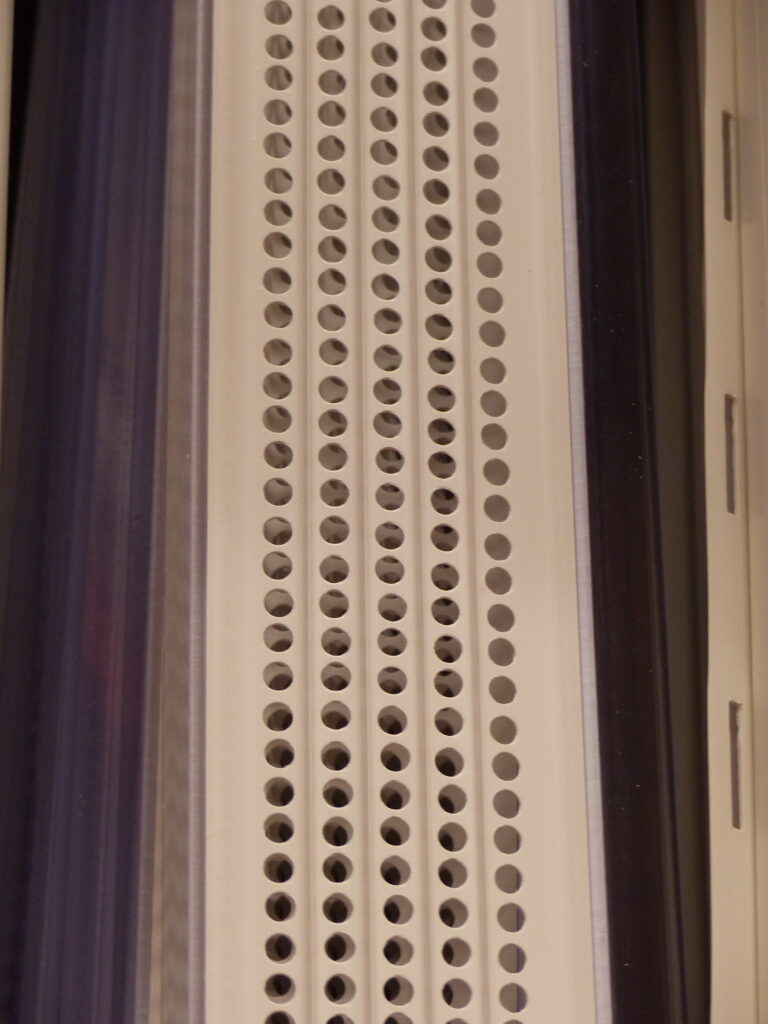
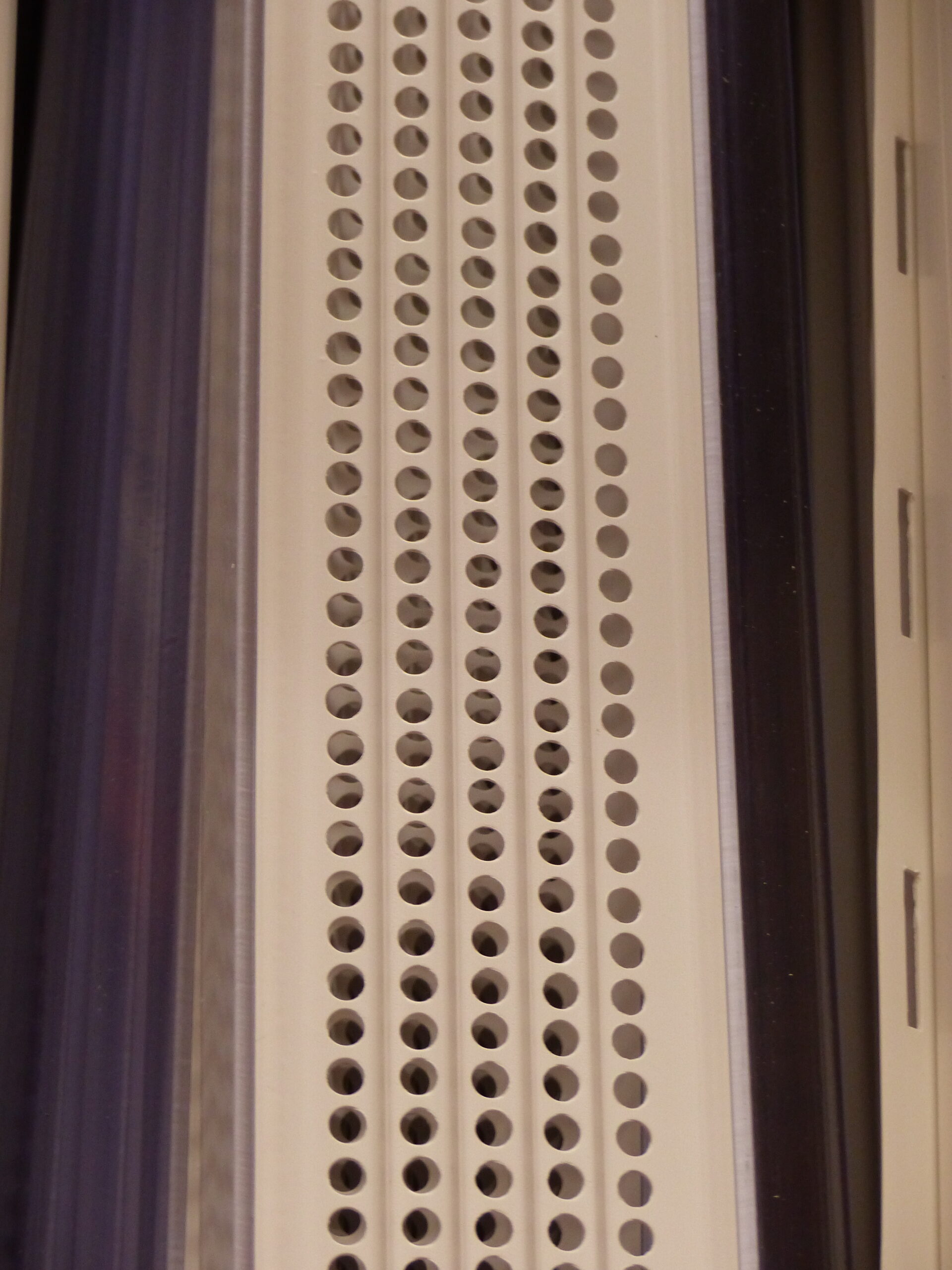
| Perforated covers or screens | Openings admit water through a cover. Raptor’s all-aluminum installation guide expressly acknowledges that guards may require maintenance. | Which local debris can pass through, and how is the gutter beneath accessed? (raptorgutterguard.com) |
| Micro-mesh | Fine mesh covers the gutter opening. Raptor’s maintenance guidance recommends routine upkeep and describes clearing surface debris. | What happens when debris remains on the mesh, and what does professional surface cleaning cost? (raptorgutterguard.com) |
| Solid hood or reverse-curve systems | Leafguard describes a hood that directs water around its edge using liquid adhesion. Its product incorporates the hood and gutter into one system. | Is this a retrofit or gutter replacement, and who services an internal blockage? (leafguard.com) |
| Brush inserts | GutterBrush’s instructions describe removing the brushes, clearing debris, cleaning the gutter and reinstalling them when maintenance becomes necessary. | Does the cleaning quote include removal and reinstallation? (gutterbrush.com) |
| Foam inserts | GutterFoam’s FAQ says cleaning is required and recommends clearing stubborn debris every six months. | What service schedule applies to the quoted model, and is that work included anywhere? (gutterfoam.com) |
These manufacturer documents establish maintenance requirements and design descriptions. They do not independently prove that one category will outperform another on your house.
For needles, seeds or sticky debris, ask for a product-specific explanation rather than accepting “handles all trees.” Also confirm whether a proposal protects entire gutter runs or only selected outlets.

3. Check roof compatibility and service access before price
Ask the installer to explain how the proposed guard meets your particular roof edge, gutter profile, hangers and corners. Request the exact installation guide with the estimate.
Installation methods can vary even within one product. Raptor’s currently linked micro-mesh guide, for example, provides different roof-edge arrangements and says not to use its under-shingle method where roofing material is adhered to the underlayment. That is a compatibility issue for a qualified installer—not a reason to lift shingles yourself. (raptorgutterguard.com)
For GAF asphalt shingles, the manufacturer’s gutter-cover bulletin advises avoiding methods that require:
- Fasteners penetrating shingles.
- Removing and replacing shingles for installation.
- Removing and eliminating drip edges.
- Installation beneath the underlayment. (gaf.com)
GAF also distinguishes damage caused by gutter-cover installation from shingle manufacturing defects covered by its warranty. Avoid blanket claims that guards either “void every roof warranty” or “cannot affect coverage.” Obtain guidance for your actual roofing product and installation. (gaf.com)
Then ask:
- Can a professional reach the gutter interior without damaging the guard?
- Who may remove sections without affecting coverage?
- What are the removal and reinstallation charges?
- What happens when the roof or gutters need replacement?
Keep roof-access work and installation with qualified professionals familiar with the relevant roofing practices. (gaf.com)
4. Read warranties as separate promises
Distinguish manufactured-parts coverage, installation workmanship, clog service and damage coverage. A long term attached to one promise does not establish the others.
Three manufacturer examples show why the wording matters:
- Raptor: Its July 2025 micro-mesh warranty provides 30-year parts coverage, but excludes labor, shipping and certain associated costs. It reduces coverage to five years within five miles of a shoreline, including lakes. Listed exclusions include improper maintenance, tree sap and contact with copper. It is non-transferable. (raptorgutterguard.com)
- LeafFilter: Its public warranty page describes repair or a refund of the material purchase price following specified debris-clogging and overflow circumstances. It directs homeowners to a representative for the full warranty. Do not read that summary as an unconditional refund of the entire installed contract price. (leaffilter.com)
- Leafguard: Its published warranty distinguishes the manufacturer’s finish coverage from clog-performance responsibility assigned to the installing dealer. It also lists exclusions, maintenance provisions and registration requirements. (leafguard.com)
These are document examples, not endorsements or legal interpretations.
Before signing, request written answers about surface cleaning, service-call fees, transferability, storm exclusions and claim procedures. Ask whether any promise applies only to the gutter interior rather than debris on top of the guard.
For existing roof and gutter warranties, send the proposed product and attachment method to the relevant manufacturer or warranty provider. A salesperson’s verbal assurance is not a substitute for the applicable written terms.
5. Use a maintenance-cost worksheet
Compare two complete plans over a period you choose—for example, ten years. Do not assume a warranty term is the product’s useful life.
| Worksheet item | Without guards | With guards |
|---|---|---|
| Added installation cost, including applicable tax | $0 | $_____ |
| Scheduled professional visits per year | _____ | _____ |
| Price per visit | $_____ | $_____ |
| Other annual service charges | $_____ | $_____ |
| One-time removal, reinstallation or replacement allowance | $_____ | $_____ |
| Comparison period | _____ years | Same period |
Calculate:
Annual maintenance = visits per year × price per visit + other annual charges
Period total = added installation cost + annual maintenance × years + one-time allowances
Simple payback = added guard installation cost ÷ annual maintenance savings
Simple payback is meaningful only when annual savings are positive. It also ignores financing, inflation and the timing of future expenses.
When gutters need replacement anyway, compare otherwise equivalent proposals with and without guards. Count the additional guard cost, not the entire gutter project, as the guard investment. Conversely, include extra work required solely to fit the selected guard.
Get several itemized written estimates. The FTC recommends comparing estimates describing the work, materials, completion date and price, rather than automatically choosing the lowest bidder. (consumer.ftc.gov)
6. Worked examples: tree-heavy versus low-debris homes
Every number below is invented for calculation only. The assumed cleaning reductions are not predicted product results. Replace them with your invoices and written service proposals.
Tree-heavy property
Assume:
- Four professional cleanings annually at $175 each: $700 a year.
- Added guard installation cost: $2,400.
- With guards, one annual inspection and surface-cleaning visit: $225.
Annual maintenance savings would be $475. Simple payback would be approximately 5.1 years.
Over ten years:
- Without guards: $700 × 10 = $7,000.
- With guards: $2,400 + ($225 × 10) = $4,650.
- Difference: $2,350 less with guards, before other expenses.
Now stress-test the assumption. If guarded gutters instead require two $225 visits annually, savings fall to $250 a year, and payback extends to 9.6 years.
The decision turns on the maintenance reduction actually achieved.
Low-debris property
Assume:
- One annual cleaning costs $175.
- Added guard installation costs $1,800.
- An annual inspection and occasional-cleaning service averages $125.
Annual savings would be only $50, producing a 36-year simple payback.
Over ten years, the guarded plan would cost $3,050, versus $1,750 without guards: $1,300 more.
That comparison does not establish a lifespan or predict future prices. It shows why a small maintenance reduction may not justify a substantial upfront premium.
7. Avoid common mistakes and keep checking drainage
The most important mistakes are practical:
Assuming every overflow means a clog. Undersized gutters and other drainage conditions can also contribute to wetness or erosion. Have persistent overflow assessed rather than automatically buying covers. (fairfaxcounty.gov)
Budgeting zero maintenance. Independent local-government guidance supports reduced cleaning frequency—not a universal elimination of cleaning. Keep a service allowance in the guarded option. (fairfaxcounty.gov)
Ignoring water after it leaves the gutter. PNNL emphasizes directing runoff away from the home. A guard does not resolve an unsuitable downspout discharge route. (basc.pnnl.gov)
Accepting a same-day sales deadline. The FTC identifies pressure for an immediate decision as a home-improvement scam warning sign. Take time to compare the written scope and verify locally required credentials and insurance. (consumer.ftc.gov)
After installation, observe from a safe ground-level location during ordinary rain, where practical. Look for spillover, streaking and erosion, and arrange professional investigation if problems persist. These are useful drainage checks, not remote diagnoses. (fairfaxcounty.gov)
Bottom line: Buy a documented reduction in maintenance, not the promise that gutters will never need attention. If the conservative cost comparison still works—and compatibility, access and warranty responsibilities are clear—the added cost may be reasonable.